check_circle
They learn by doing.
They light up in labs, shops, projects, internships, and any setting where effort produces a visible result.
Widening the definition of success is not lowering the bar.
Educators can help students take alternatives seriously without treating them as second-best. The goal is not to sort students into “college material” and “non-college material.” It is to match students to environments where they can grow.
Show Real Career Paths Free career match · 10 minutes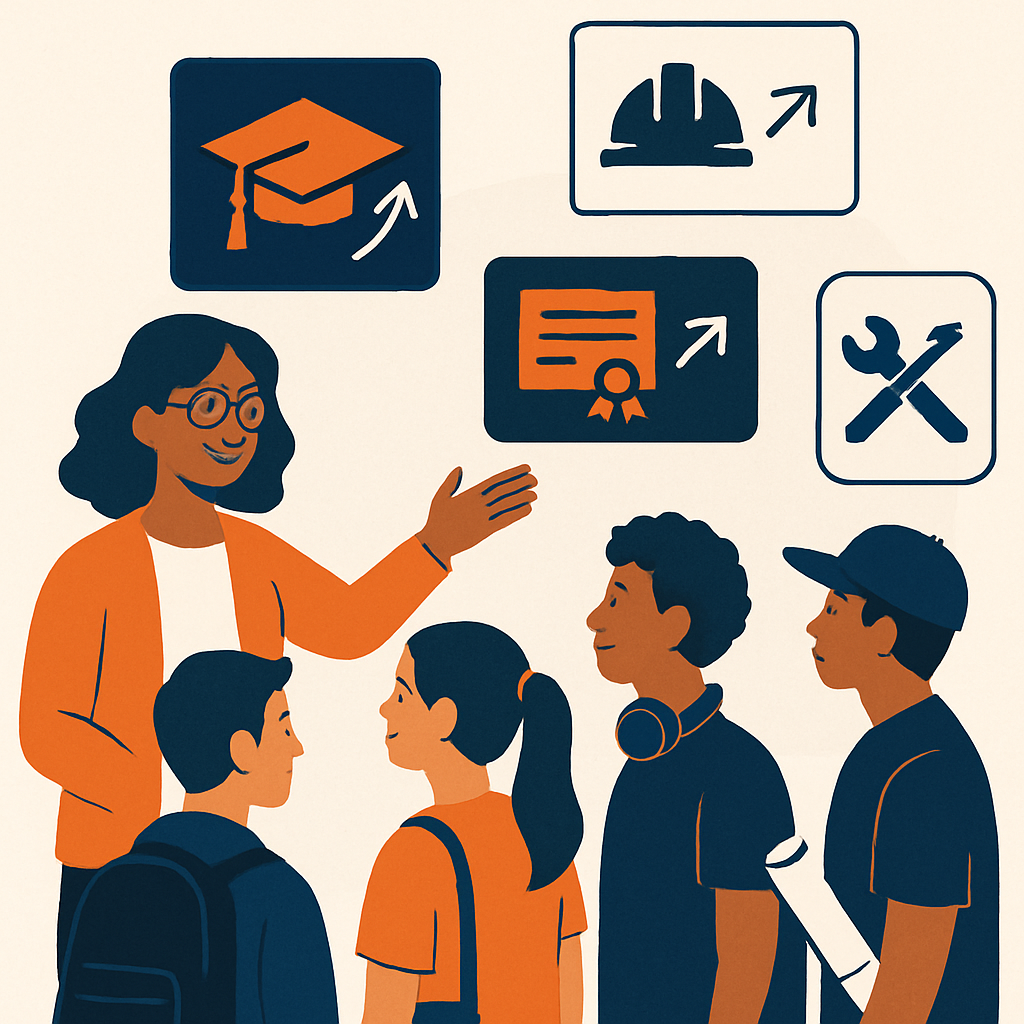
They light up in labs, shops, projects, internships, and any setting where effort produces a visible result.
They ask how things work, like diagnosing issues, and stay engaged when problems are concrete rather than abstract.
They may be capable academically but deeply unmotivated by classroom-only learning and eager for adult responsibility.
They care about usefulness, autonomy, movement, contribution, and the chance to earn their way forward.
Reframe
Students hear “not college” as “not good enough” when adults frame alternatives as fallback options. Lead with fit, strengths, and outcomes instead.
Normalize
Celebrate apprenticeships, military service, certifications, entrepreneurship, and skilled trades with the same seriousness as university admissions.
Ground it
Students make better decisions when they hear from adults doing the work, not just adults talking about the work.
Equip
Students need directories, visits, contacts, and deadlines. Validation without process rarely changes behavior.
Collect local union and non-union apprenticeship links students can actually apply through.
Local workforce systems often know which programs are hiring, funded, and worth attention.
Open houses, job shadows, and shop visits make invisible careers feel concrete and attainable.
Show the shortest path from interest to credential, then from credential to work.
A wider map leads to better choices, stronger buy-in, and less shame around hands-on or nontraditional routes.
Show Real Career Paths →